



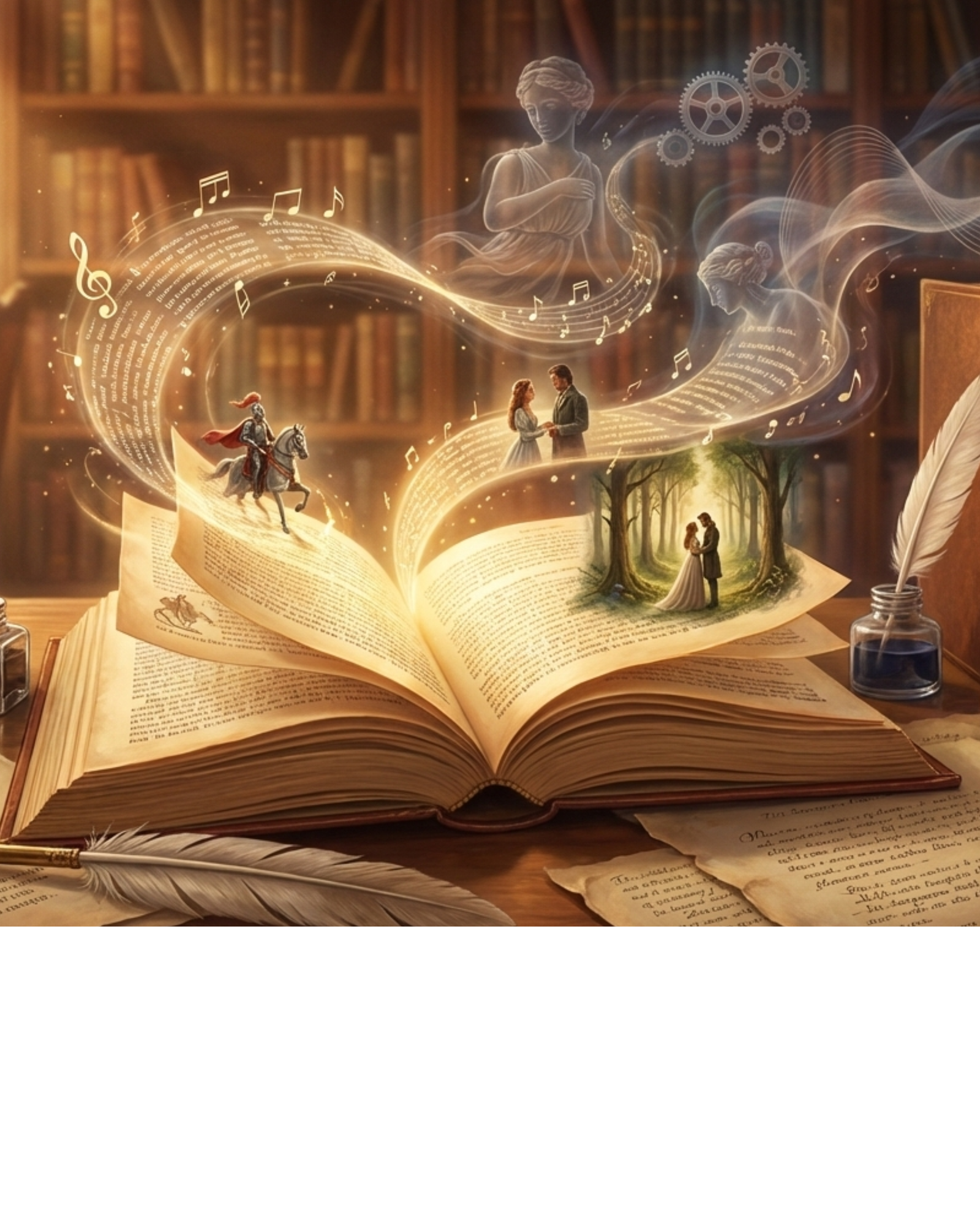
 What is Literature?
Literature means written works that express ideas, feelings, stories, or imagination in a beautiful and meaningful way.
In simple words:
Literature is writing that has artistic value and gives pleasure, knowledge, or emotional experience to the reader.
Literature includes:
Poems, Stories, Novels, Plays, Essays
- Definition of Literature
Some simple definitions:
- Literature is the art of written expression.
- Literature is writing that reflects life, society, culture, and human experience.
- Literature is creative writing that uses imagination and language skillfully.
- Main Features of Literature
Literature has the following features:
a) Artistic Use of Language
- Uses beautiful and meaningful words
- Includes imagery, metaphors, symbols, etc.
- b) Expression of Human Feelings
- Shows emotions like love, sorrow, joy, fear, hope
- c) Reflection of Life and Society
- Shows real-life experiences, social issues, and culture
- d) Imagination and Creativity
- Writers use imagination to create stories and characters
- e) Universal Appeal
- Good literature is meaningful for people of all times and places
- Types (Genres) of Literature
There are three main types of literature:
- Poetry
Poetry is writing arranged in lines and verses.
Features of Poetry:
Rhythm and rhyme, Musical quality, Deep emotions and imagination
Examples:
Sonnets, Lyrics, Epics, Odes
Prose: Prose is ordinary written language, not arranged in lines.
Types of Prose:
Novels, Short stories, Essays, Biographies
Features of Prose:
- Clear and direct language
- Realistic presentation of life
- Drama: Drama is literature written to be performed on stage.
Features of Drama:
- Dialogue-based
- Includes acts and scenes
- Shows action through characters
Examples:
- Tragedy, Comedy, Tragicomedy
- Forms of Literature
- a) Fiction
- Imaginary or invented stories
- Example: novels, short stories
- 6.b) Non-Fiction
- Based on facts and real events
- Example: essays, biographies, autobiographies
- Functions (Importance) of Literature
Literature is important because it:
- Entertains readers
- Teaches moral values
- Improves language skills
- Develops imagination and creativity
- Helps us understand life and human nature
- Literature and Society
- Literature reflects society
- It shows social problems like poverty, injustice, war, and gender issues
- Writers express social ideas and inspire change through literature
- Literature and Education
Literature helps students:
- Improve reading and writing skills
- Learn new words and expressions
- Think critically and creatively
- Understand different cultures and traditions
- Difference Between Literature and Ordinary Writing
| Literature | Ordinary Writing |
| Artistic and creative | Simple and factual |
| Emotional and imaginative | Practical and informative |
| Long-lasting value | Temporary use |
- Conclusion
Literature is an important part of human culture.
It expresses human thoughts, emotions, dreams, and experiences through creative and artistic language.
Through literature, we understand life, society, and ourselves better.
Why Is Literature Important? (Simple & Detailed Notes)
- Literature Helps Us Understand Life
Literature shows real human experiences such as love, pain, success, failure, hope, and fear.
By reading literature, we learn how people think and feel in different situations.
It helps us understand life and human nature.
- Literature Develops Imagination and Creativity
- Stories and poems make us imagine new worlds, characters, and ideas.
- It improves creative thinking and imagination.
This helps the mind grow and think freely.
- Literature Teaches Moral Values and Lessons
Many literary works teach lessons about:
- Good and evil
- Right and wrong
- Honesty, kindness, courage, and justice
Literature guides us to become better human beings.
- Literature Reflects Society and Culture
- Literature shows the customs, traditions, beliefs, and problems of society.
- It records history, culture, and social change.
Through literature, we understand different cultures and times.
- Literature Improves Language and Communication Skills
- Reading literature increases vocabulary.
- It improves grammar, writing style, and expression.
- It helps in speaking and writing clearly.
Literature makes our language rich and powerful.
- Literature Entertains and Gives Pleasure
- Poems, novels, and plays entertain us.
- They provide relaxation and enjoyment.
Literature gives emotional pleasure and mental relief.
- Literature Encourages Critical Thinking
- Readers think deeply about characters, themes, and messages.
- It helps develop analytical and reasoning skills.
Literature trains the mind to think deeply and independently.
- Literature Preserves History and Human Experience
- Literature keeps records of past events and human struggles.
- It connects the past, present, and future.
Literature is a storehouse of human experience.
- Literature Builds Empathy and Understanding
- Reading about different lives helps us understand others’ feelings.
- It creates sympathy and compassion.
Literature makes us more understanding and humane.
- Literature Is Essential for Education
- Literature is an important subject in education.
- It shapes personality and character.
- It develops emotional and intellectual growth.
Conclusion
Literature is important because it:
Educates and entertains
Reflects life and society
Teaches values and lessons
Improves language and thinking
- Builds imagination and empathy
Literature enriches the human mind and soul.

