



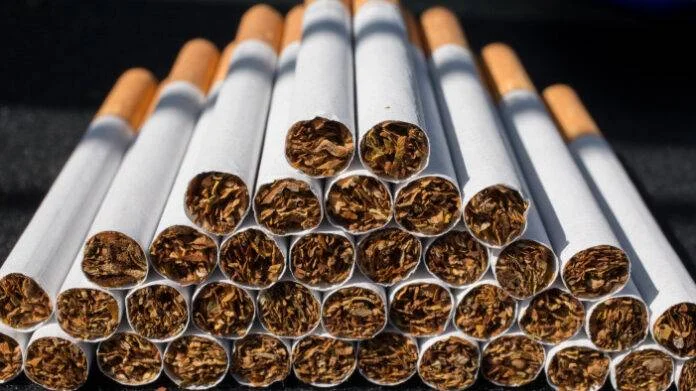
Pakistan is facing a silent but staggering crisis one driven not by natural disasters or global recessions, but by the widespread use of tobacco. New research from the Pakistan Institute of Development Economics (PIDE) reveals that tobacco consumption is costing the country far more than previously understood, both in human lives and economic losses.
Despite this overwhelming evidence, Pakistan’s tobacco policies remain weak, fragmented, and heavily influenced by industry narratives.
A Deadly Public Health Emergency
Every year, 164,000 Pakistanis die due to tobacco-related illnesses a number that continues to rise as cigarettes and smokeless tobacco products remain cheap and easily accessible. These deaths are preventable, yet the country lacks robust smoking-cessation services, public awareness programs, or rehabilitation centers.
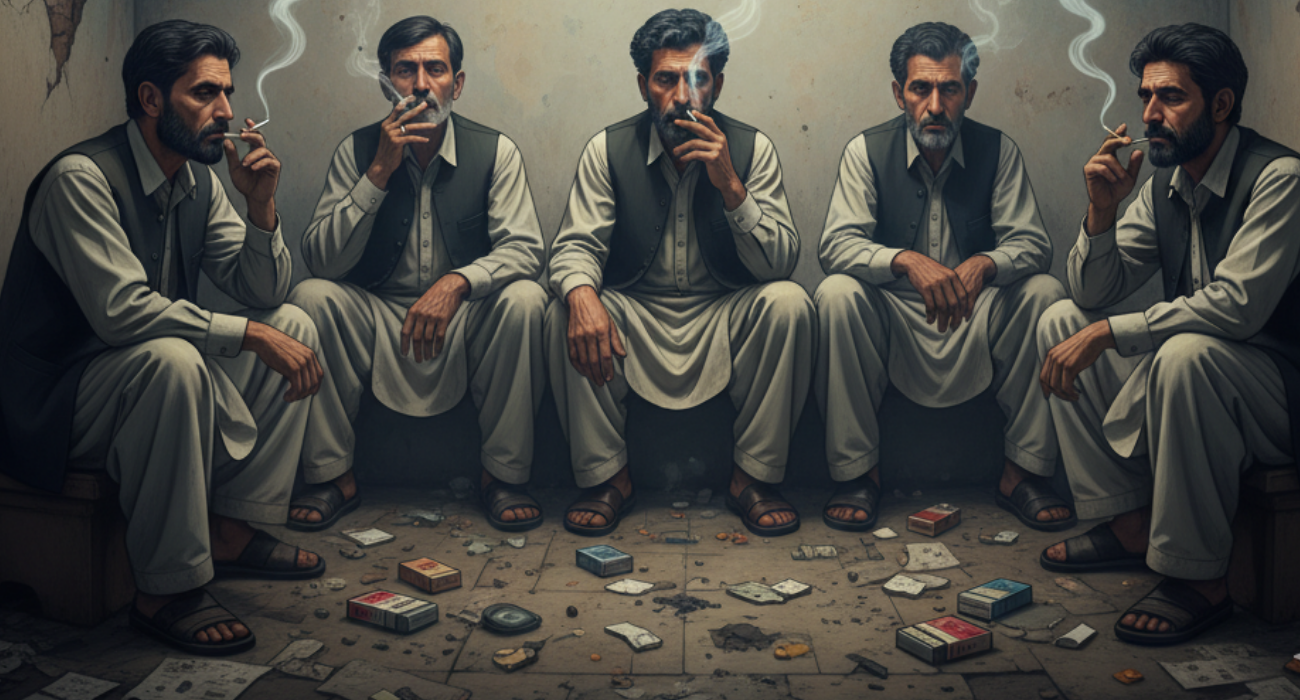
Pakistan also carries a heavy burden of diseases strongly linked to tobacco use, including cancer, chronic obstructive pulmonary disease (COPD), cardiovascular disorders, tuberculosis complications, and oral cancers caused by gutka, paan, and naswar. These conditions not only claim lives but also place enormous pressure on an already strained healthcare system.
The True Economic Cost: Far Beyond Industry Contributions
For decades, the tobacco industry in Pakistan has promoted the illusion that it is one of the country’s top revenue generators. However, PIDE’s detailed economic analysis dismantles this argument entirely.
Key Findings from PIDE’s Landmark Study
- Total economic cost of smoking-related diseases (2019):
Rs. 615.07 billion (US$ 3.85 billion) - Tobacco industry tax contribution (2019):
Rs. 120 billion only 20% of the actual cost - Indirect costs (lost productivity, morbidity, premature mortality):
70% of total economic burden - Major share of disease burden:
71% comes from cancer, cardiovascular, and respiratory diseases - Smoking-attributable cost as percentage of GDP:
1.6% for all diseases, and 1.15% for the three major disease groups - Rural Pakistan bears 61% of the total cost, males 77%, and adults aged 35–64 carry the heaviest burden.
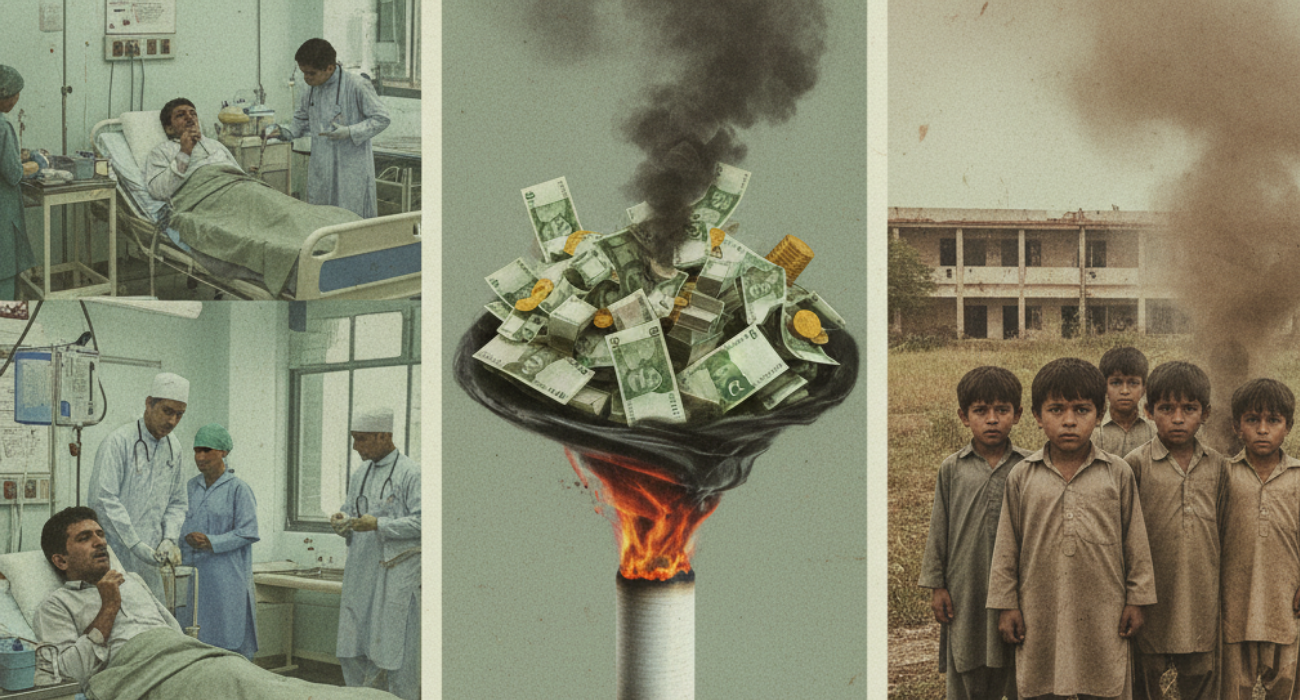
Simply put, Pakistan loses more than five times what it earns from tobacco taxes.
In fact, the economic and health costs of tobacco exceed the entire annual public health spending of Pakistan.
Cheap Cigarettes, Weak Laws, and Rising Illegal Trade
Although Pakistan has multiple tobacco control laws, implementation remains extremely poor. Cigarettes are sold openly everywhere on carts, in small shops, near schools, and even through online platforms. Cheap brands are abundant, primarily because of the multi-tier taxation system that enables companies to market very low-priced cigarettes to young people and low-income groups.
PIDE warns that one-third of Pakistan’s cigarette market is now illegal, resulting in both lost tax revenue and easy access for youth. Meanwhile, smokeless tobacco products such as gutka, paan, and naswar continue to be sold without any regulatory oversight.
The problem is not the absence of laws it is the near-total lack of enforcement.
Tobacco Industry Tactics: Deep Pockets, Deep Influence
Global tobacco giants and their local partners have long viewed Pakistan with its young population and high addiction potential as a lucrative market. Their advertising budgets far exceed the government’s spending on health promotion.
For example:
- In one year, a tobacco company spent over Rs. 61 million on advertising.
- In contrast, the government’s tobacco awareness budget was just Rs. 2 million.
Industry influence also affects policymaking, tax regulations, and even public perception. The government’s continued dependence on tobacco-generated revenue creates a major barrier to strong reforms.
The Human Cost Behind the Numbers
Beyond statistics, tobacco has deeply personal consequences. Families lose breadwinners. Young people become lifelong addicts. Poor households spend significant portions of their income on cigarettes, worsening poverty.
Doctors who should lead the anti-smoking mission are not immune either. Surveys show over 30% of male house officers in major hospitals smoke, diminishing the credibility of health warnings.
Children are exposed to smoke in public places due to the weak implementation of smoke-free policies. Despite having laws protecting non-smokers, enforcement is almost non-existent.
A Way Forward: Strong Policies Can Save Millions
Pakistan has already signed and ratified the WHO Framework Convention on Tobacco Control (FCTC), which outlines the most effective strategies to reduce tobacco use. But real progress requires political will.
PIDE’s Key Policy Recommendations
- Increase tobacco taxes 4–5 times to reflect the true economic cost and reduce affordability.
- Immediately meet the WHO standard of keeping excise taxes at 70% of the retail price.
- Shift to a single-tier tax system to eliminate industry manipulation.
- Enforce bans on tobacco advertising, including indirect and digital promotions.
- Implement smoke-free environments in public places and restaurants nationwide.
- Strengthen monitoring of illegal cigarette production and smuggling.
- Establish quitting helplines, rehab centers, and counseling services.
- Train doctors in smoking cessation techniques.
- Support farmers in shifting to alternative crops to reduce tobacco dependency.
The Urgency of Action
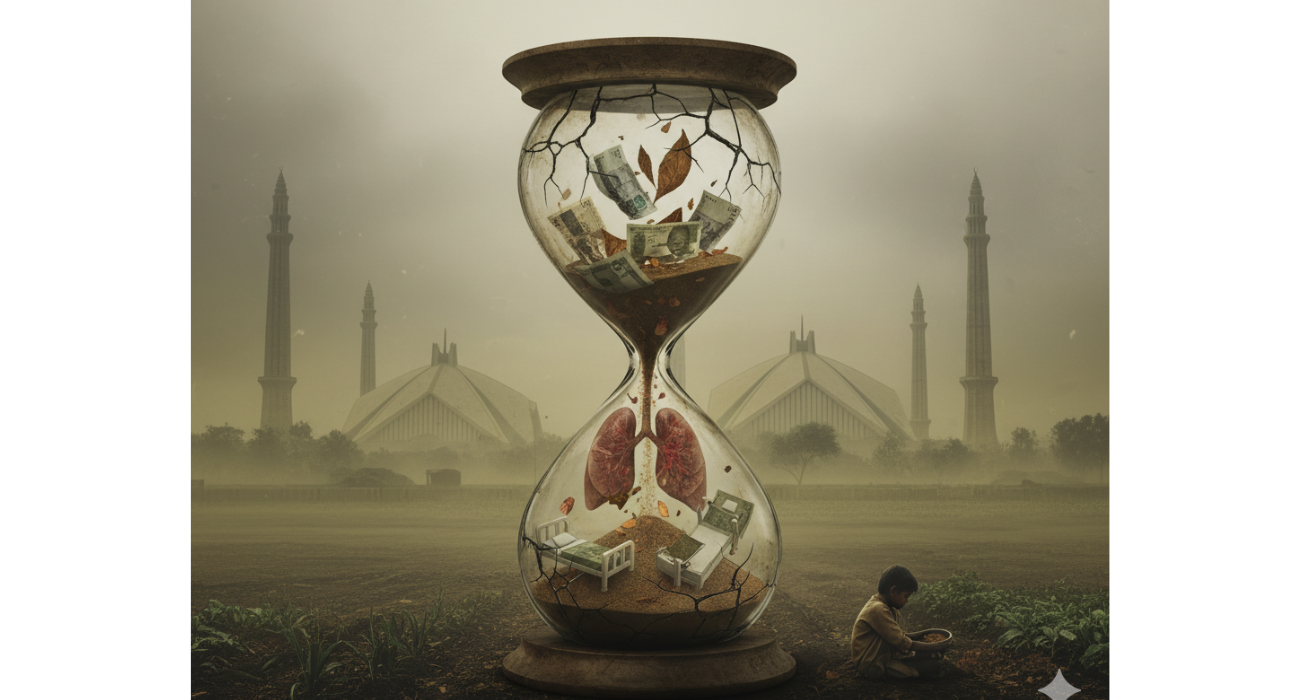
Tobacco is the world’s biggest preventable killer. If decisive action is not taken soon, Pakistan will continue to lose hundreds of thousands of lives and hundreds of billions of rupees every single year.
The WHO’s MPOWER policy package offers a proven roadmap to reverse the tobacco epidemic:
Monitor, Protect, Offer help, Warn, Enforce, Raise taxes.
Time is running out. Without swift and comprehensive reforms, tobacco will continue to rob Pakistan of its health, productivity, and economic stability.
Write By Muzamil Ahmed

