



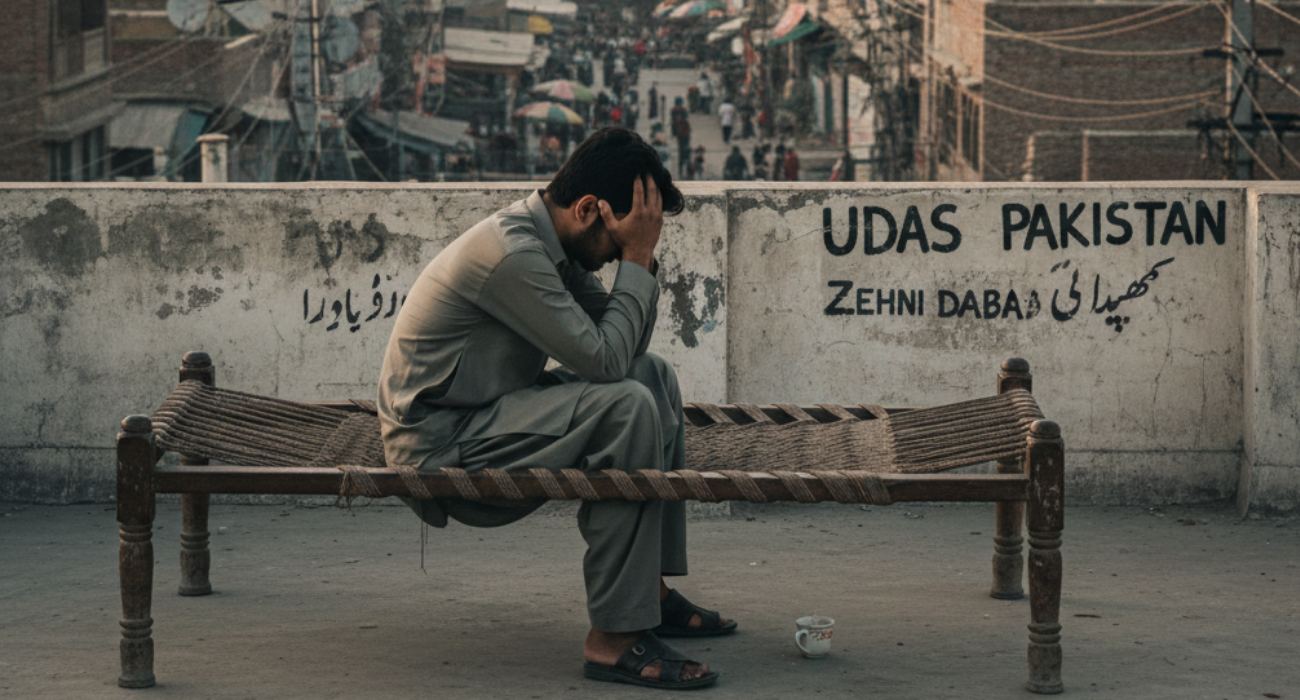
Pakistan is confronting one of the most alarming mental health crises in its history. Recent disclosures by the Ministry of Health and independent experts reveal that nearly 80 million Pakistanis almost one-third of the population are suffering from psychological, emotional, or neurotic disorders. As inflation surges, unemployment rises, and law and order deteriorates, the country’s mental health burden has intensified dramatically, affecting every age group and socioeconomic class.
A Crisis Acknowledged in Parliament
The shocking figures were presented during a session of the National Assembly, where lawmakers were informed that almost every major hospital in the country offers psychiatric services, yet this infrastructure is nowhere close to meeting the overwhelming national demand.
According to the ministry’s report:
-
80 million Pakistanis face mental health challenges
-
All major hospitals have psychiatric wards, but capacity remains limited
-
126 medical colleges teach psychiatry, yet the number of trained professionals remains insufficient
Members of Parliament raised concerns about the suspension of health card services in Islamabad and Gilgit-Baltistan. Federal Minister Jam Kamal clarified that the suspension was due to administrative irregularities, not political motives, and assured that the service would soon be restored after consultations with State Life Insurance.
Experts Warn of a Health System Under Strain
Health professionals note that mental illnesses in Pakistan are closely linked to unhealthy lifestyles, pollution, rapid urbanization, violence, and chronic diseases such as:
-
Heart disease
-
Hypertension
-
Diabetes
-
Cancer
-
Neurological and psychiatric disorders
A think tank at Aga Khan University emphasized the urgent need to upgrade mental healthcare, stressing that non-communicable diseases (NCDs) are destroying productivity, straining household finances, and slowing national economic growth.
Professor Zainab Samd explained that families are pushed toward poverty when forced to pay for expensive long-term treatments without adequate government support.
“Silent Killers” Ignored by the System
Professor Wasiq Shakir highlighted the stark disparity between the attention given to sudden disasters and the neglect of chronic illnesses. He noted that the 2010 Airblue crash where 125 people lost their lives led to immediate regulatory reforms due to public pressure. In contrast, non-communicable diseases claim 14 times more lives every single day, yet receive little urgency from policymakers or civil society.
“These illnesses creep into society quietly,” Shakir said. “They destroy lives without headlines, and that’s why they are ignored.”
Youth and Women at High Risk
Pakistan’s demographic structure heightens the urgency of the situation. Nearly 60% of the population is under the age of 30, a group disproportionately affected by unemployment, financial stress, political instability, and lack of opportunities.
Renowned parapsychologist and healer Dr. Ayesha Ali stated that young people are witnessing unprecedented levels of anxiety, depression, and emotional exhaustion. She attributed this to instability, conflict, poverty, and years of national trauma.
Dr. Ayesha further noted:
-
Patriarchal norms limit women’s ability to seek help
-
Domestic violence and social pressures increase mental health risks
-
Poor access to education and healthcare leaves young women especially vulnerable
-
Mass trauma events terrorism, war, ethnic violence have left lasting psychological scars
She also announced the launch of Pakistan’s first Mental Health Institute and Treatment Centre (MHITC) in Abbottabad, designed to provide modern therapy, training, and free treatment for eligible patients. The project includes a “Life Changing Package” to support underprivileged children with education, mentorship, and essential facilities.
Systemic Weaknesses Hindering Recovery
Pakistan’s mental health system suffers from chronic institutional failures:
-
Severe shortage of psychiatrists and psychologists
-
Limited services outside major cities
-
Outdated curricula in medical institutions
-
Stigma and lack of awareness
-
Reliance on faith healers due to inadequate access
-
Lack of coordinated national response
In KP alone, 40 million people rely on only 50 psychiatrists, half of whom are based in Peshawar. Psychiatric wards in public hospitals operate with over 90% occupancy—often without trained specialists.
A National Plan, but Slow Progress
Pakistan has committed to universal health coverage and adopted the WHO’s Mental Health Action Plan (2013–2030). The Ministry of Planning has recently formed a Mental Health Strategic Planning and Coordination Unit, aiming to:
-
Train frontline healthcare workers
-
Integrate mental health services into primary healthcare
-
Create national referral systems
-
Improve data collection for policymaking
-
Launch digital mental health and psychosocial support models
Pilot projects in KP have shown promising results, with hundreds of physicians and community workers receiving training.
The Social Reality Behind the Numbers
Mental health in Pakistan cannot be separated from cultural pressures.
Women, in particular, face:
-
Patriarchal restrictions
-
Limited autonomy
-
Social isolation
-
Taboo surrounding mental health
-
Lack of gender-sensitive support systems
Studies indicate that 57.5% of depression cases involve women, particularly from disadvantaged communities. These issues are compounded by deep-rooted cultural expectations to remain silent, submissive, and patient—even while experiencing emotional or physical distress.
Grassroots Digital Initiatives Rising
A growing network of educators, psychologists, and digital practitioners has begun experimenting with low-cost online mental health interventions, especially for young women. Through open educational resources, reflective journaling, peer support forums, and digital literacy programs, these initiatives help participants:
-
Build confidence
-
Understand their emotional needs
-
Access knowledge outside traditional systems
-
Form supportive communities
-
Develop a digital identity and sense of empowerment
Collaborative resource development has given young women a voice in shaping mental health guidance relevant to their cultural and social realities.
A National Emergency in Slow Motion
Pakistan’s mental health crisis is vast, deep, and complex. It is fueled by economic uncertainty, political instability, patriarchal norms, chronic diseases, and decades of unattended trauma. Despite the mounting crisis, mental health remains overshadowed by other national challenges.
However, the emergence of new policies, community initiatives, and digital interventions shows that change is possible—if met with political will and sustained public pressure.
For now, experts warn that without urgent action, the silent epidemic threatening the emotional well-being of tens of millions will only grow, endangering the country’s social stability, productivity, and future generations.
Write By: Abiha Bilal

