



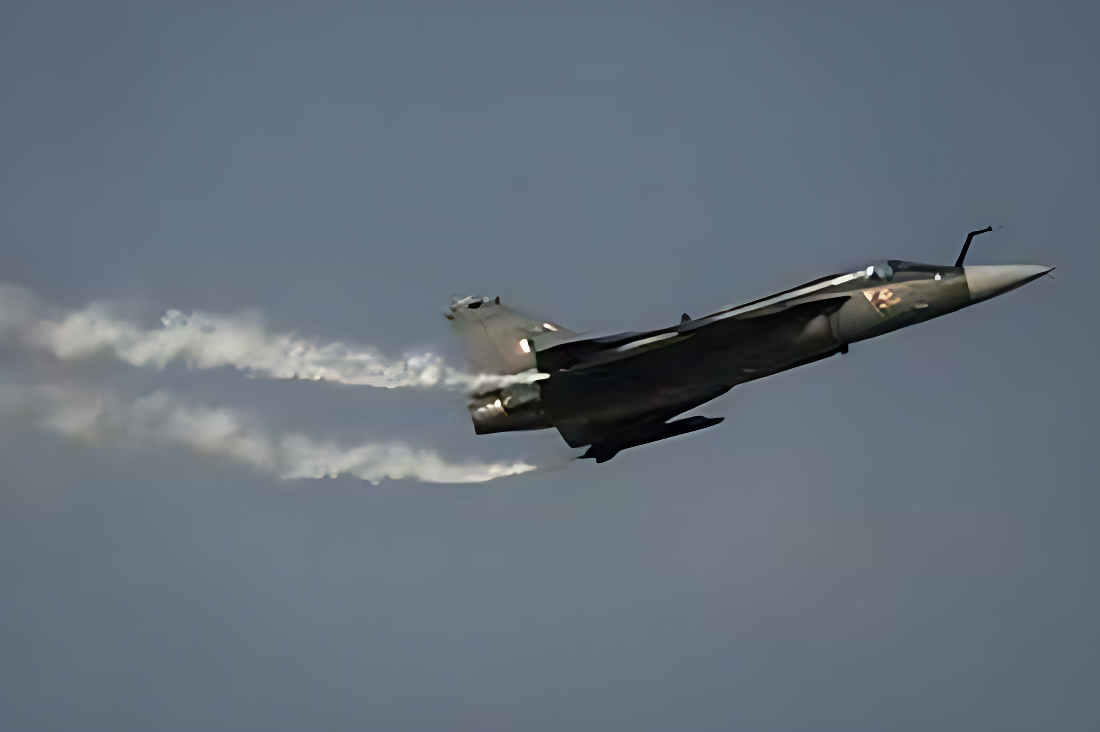
 Indian Air Force Tejas Fighter Jet Crashes During Dubai Airshow, Sparks Global Safety Concern
A major incident unfolded at the Dubai Airshow on Thursday when an Indian Air Force (IAF) Tejas fighter jet crashed during a high-speed demonstration flight, sending shockwaves across the aviation community and casting a cloud over India’s long-praised indigenous aircraft program. The aircraft, which was participating in one of the world’s most prominent international air exhibitions, spiraled downward unexpectedly before crashing and bursting into flames on impact.
Eyewitnesses reported a sudden loss of control moments after the jet performed a steep maneuver. The aircraft, which was displaying aerobatic capabilities before an international audience of defense officials, aviation companies, and media personnel, broke formation and went into a rapid downward trajectory. Emergency crews rushed to the crash site within minutes, sealing off the area to prevent further risk.
No Official Word Yet on Pilot’s Condition
As of now, authorities have not released any details regarding the condition of the pilot or possible casualties. Rescue officials at the venue confirmed that the wreckage had been secured and that emergency medical teams were attending to the situation. Indian media outlets, which confirmed the crash shortly after international agencies reported it, have stated that the IAF is awaiting official updates from Dubai authorities.
The lack of immediate information on the pilot’s safety has added to public anxiety, particularly in India, where the Tejas program is considered a symbol of technological progress and national pride.
Incident Raises Difficult Questions for India’s Aviation Reliability
The crash comes at a particularly sensitive time for India’s defense manufacturing ambitions. The Tejas Light Combat Aircraft (LCA), developed by the Hindustan Aeronautics Limited (HAL) after decades of research and billions of dollars in investment, has been showcased internationally as India’s success story in indigenous fighter jet production. The aircraft is regularly included in airshows to demonstrate India’s growing defense capabilities and to attract potential foreign buyers.
This latest incident, however, has raised uncomfortable questions about the reliability and operational safety of the Tejas platform. Aviation analysts and spectators at the Dubai Airshow expressed concerns over what went wrong, especially given that demonstration flights are typically performed under carefully monitored and controlled conditions.
For the Indian contingent, the timing could not have been worse. The Dubai Airshow, attended by over 100 countries, is a platform where nations not only display their aviation achievements but also compete for defense contracts and technological partnerships. A high-profile crash on such a massive stage inevitably draws scrutiny.
Dubai Authorities Launch Investigation
Dubai Civil Aviation and Airshow authorities have launched a full-scale investigation to determine the cause of the crash. Officials stated that all flight data, communication logs, and maintenance records would be thoroughly examined. Investigators are expected to work closely with Indian Air Force representatives and HAL engineers, who are already coordinating with Dubai officials.
Initial investigations will focus on mechanical failure, pilot error, environmental conditions, and possible system malfunction, though experts caution against drawing early conclusions.
A spokesperson for the Dubai Airshow confirmed that the crash site had been secured and that evidence collection was underway. They assured participants and attendees that the incident would not disrupt the remaining schedule but emphasized that safety protocols had been further tightened.
Global Reactions and Industry Impact
The crash quickly became international news, with aviation circles debating the implications. Several defense analysts noted that such incidents, while rare, can significantly influence international perception especially for countries seeking to expand their defense exports.
India had been planning to pitch the Tejas to several nations including Argentina, Malaysia, and the Philippines. The Dubai Airshow was seen as an opportunity to highlight the aircraft’s improved capabilities, recent upgrades, and combat-readiness.
“This kind of incident does not automatically invalidate a platform,” a defense expert in Dubai said. “Many aircraft around the world have suffered accidents during airshows. But the concern now lies in how India handles the investigation, what conclusions are drawn, and how transparent the process is.”
Tejas Program Under Renewed Spotlight
Developed to replace aging MiG-21 jets in the Indian Air Force arsenal, the Tejas LCA has undergone years of testing, certification, and phased induction. India has invested heavily in promoting the aircraft as part of its “Make in India” initiative and has been pushing to increase foreign interest in the platform.
However, critics argue that the Tejas program has faced persistent delays, recurring technical issues, and frequent design modifications over its long development cycle. Supporters maintain that the aircraft remains a robust, modern fighter jet and that India should take the incident as an opportunity to strengthen safety protocols and refine existing systems.
Airshow Continues Amid Heightened Caution
Despite the dramatic crash, the Dubai Airshow continued its scheduled activities, though participants reported a more subdued atmosphere. Security personnel were visibly more active, and the remaining flight demonstrations were carried out under enhanced oversight.
The Indian pavilion at the show remained open, though several representatives chose not to comment publicly until official statements are released by both governments.
Awaiting Answers
For now, the aviation world awaits official confirmation regarding the pilot’s condition and the precise cause of the crash. The incident has undoubtedly placed the Tejas fighter program under international scrutiny, and the coming investigation will play a crucial role in determining its future trajectory.
As Dubai authorities move forward with their probe, both Indian and global defense observers will closely monitor developments not only for safety reasons but also for the broader implications on India’s rapidly evolving defense ecosystem.

