



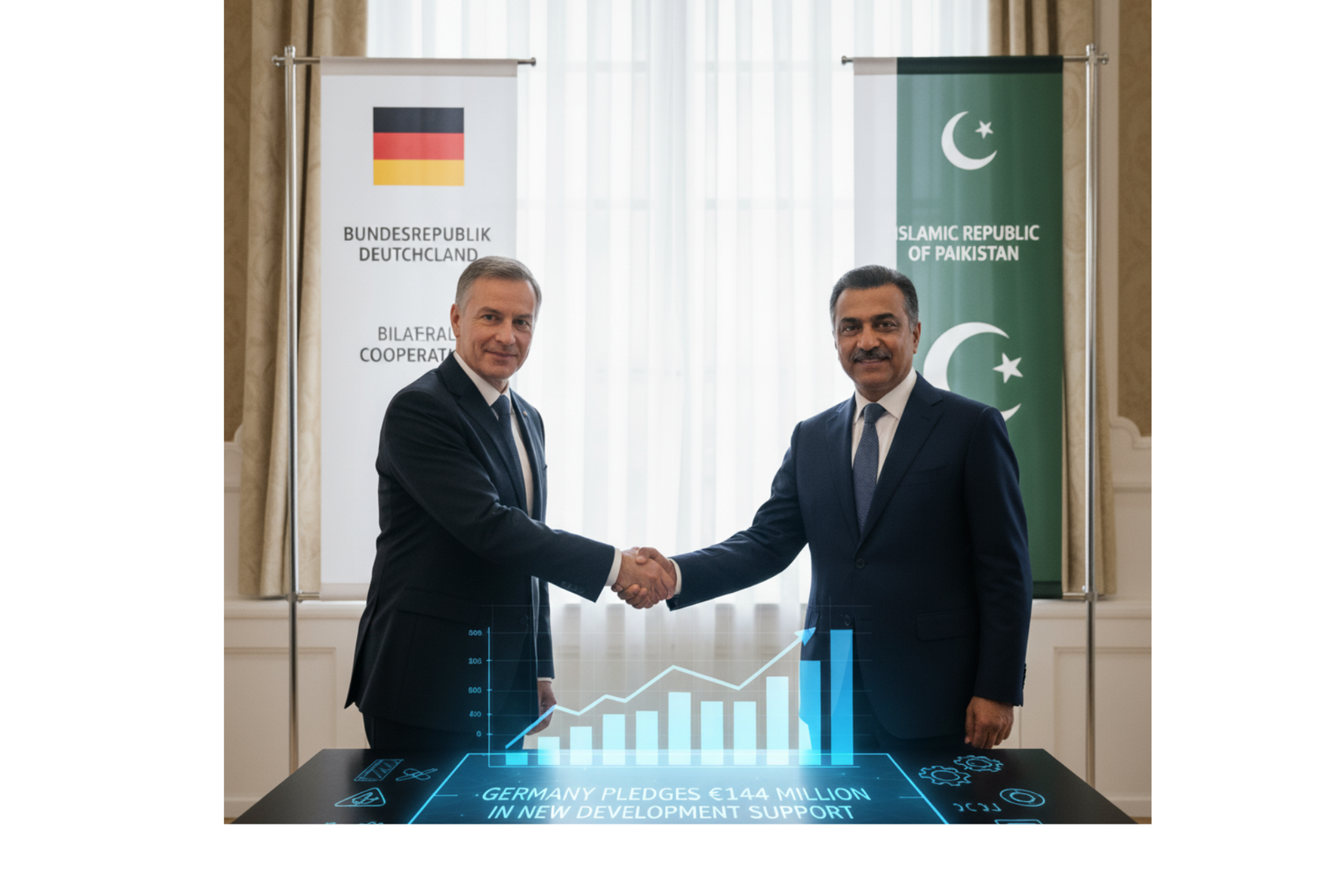
 Germany Pledges €144 Million in New Development Support as Bilateral Cooperation with Pakistan Deepens
Germany has reaffirmed its long-standing commitment to Pakistan’s development agenda by announcing a fresh assistance package worth €144 million, aimed at strengthening climate resilience, boosting renewable energy capacity, improving education, and expanding technical and vocational training opportunities across the country. The announcement marks a significant step forward in the two nations’ decades-long cooperation, which has grown steadily into one of the most robust development partnerships in the region.
The new funding commitment was confirmed by German Ambassador Ina Lepel during an interview with the Associated Press of Pakistan (APP). Ambassador Lepel expressed strong optimism about the future of Pakistan-Germany relations, underscoring that the bilateral relationship today is “broader, stronger, and more dynamic than ever before.”
A Diverse and Expanding Partnership
Ambassador Lepel highlighted that cooperation between Islamabad and Berlin has evolved far beyond traditional development assistance. Today, the partnership spans a diverse spectrum—economic engagement, trade relations, cultural exchange, investment initiatives, academic collaboration, and hydropower development are all key elements of the growing relationship.
According to the ambassador, the recent government-to-government negotiations have reaffirmed Germany’s commitment to Pakistan’s priority sectors. The €144 million package reflects Berlin’s recognition of Pakistan’s development challenges but also its economic potential, especially in renewable energy, climate mitigation, and human capital development.
She described the two countries as partners with a “wide and dynamic portfolio,” emphasizing that Germany sees Pakistan not only as a recipient of aid but as an important partner in achieving mutually beneficial development goals.
Climate and Energy: The Core of German Assistance
A significant portion of Germany’s new financial commitment is dedicated to climate resilience and clean energy, reflecting Berlin’s strategic focus on helping vulnerable countries prepare for the impacts of global warming. Ambassador Lepel stated that climate and energy now form the backbone of German development support to Pakistan.
Germany’s assistance is expected to help Pakistan:
- Strengthen its disaster preparedness systems
- Build resilience against climate-induced floods and droughts
- Transition toward greener, low-carbon energy sources
- Improve energy efficiency and reduce transmission losses
- Expand renewable energy solutions, particularly solar and hydropower
The ambassador noted that Germany has been closely supporting Pakistan’s climate agenda for years, especially in the wake of the devastating 2022 floods, which highlighted the urgent need for countries like Pakistan to strengthen their climate defences.
Growing Interest in German Education Among Pakistanis
One particularly encouraging trend, according to Lepel, is the rising number of Pakistani students choosing German universities for higher education. The increase reflects strong academic ties, growing awareness of Germany’s world-class technical and research institutions, and the high international credibility of German degrees.
The ambassador urged aspiring students to rely on Germany’s official portal, “Just Study in Germany,” instead of private agents or unverified intermediaries. She stressed that the official platform offers transparent, accurate, and free information, ensuring applicants are not misled or overcharged by unauthorized consultants.
Germany’s academic institutions continue to attract students worldwide due to their emphasis on research, innovation, applied sciences, and practical industry exposure. Pakistani enrollment trends indicate a deepening trust in German education and a desire among young professionals to pursue high-quality learning opportunities abroad.
Cultural Richness and Tourism: A Growing Area of Engagement
Ambassador Lepel also expressed admiration for Pakistan’s cultural heritage, diverse landscapes, and enormous yet mostly untapped tourism potential. She said that German travelers, particularly mountaineers and adventure tourists, have shown increasing interest in visiting Pakistan’s northern regions.
In recent years, German climbers have successfully summited several of Pakistan’s iconic peaks, including K2, Nanga Parbat, and Broad Peak, contributing to the growing global visibility of Pakistan’s adventure tourism sector. However, the ambassador pointed out that the tourism industry requires stronger infrastructure roads, lodging facilities, connectivity, and safety standards to attract large volumes of international visitors.
She encouraged Pakistan to continue developing sustainable tourism models that not only promote economic growth but also protect natural habitats and cultural sites. Germany, she added, remains interested in supporting such initiatives through technical collaboration and community-based tourism projects.
Germany’s Support for Technical & Vocational Training
A key component of the new cooperation package focuses on education and vocational training, sectors in which Germany has historically played an influential role. Ambassador Lepel emphasized that Germany’s globally recognized technical and vocational education system known as the Dual Training Model can help transform Pakistan’s workforce and equip young people with employable skills.
Germany has recently opened its labor market to skilled workers from developing countries, including Pakistan. The country faces labor shortages in engineering, nursing, IT, construction, and manufacturing sectors, creating new opportunities for foreign professionals. Lepel noted that Pakistan stands to benefit immensely from this policy shift, provided that its workforce receives training aligned with international standards.
Collaborations between German institutions and Pakistani technical training centers have already strengthened curriculum development, industry linkages, and skill certification systems. The new funding will further accelerate such initiatives, enabling more Pakistani workers to access high-skilled employment both domestically and abroad.
A Relationship Built on Trust and Shared Goals
Germany has long been one of Pakistan’s most stable and reliable development partners. From post-flood reconstruction efforts to renewable energy projects, from literacy initiatives to vocational training, German assistance has consistently supported Pakistan’s long-term national goals.
With the new €144 million commitment, the partnership is poised to enter an even more productive phase one focused on sustainability, human development, economic stability, and climate resilience.
Ambassador Lepel concluded by reaffirming that Germany views Pakistan not just through the prism of development aid, but as a country with enormous potential, young talent, and a dynamic future. She stated that Berlin will continue working closely with Islamabad to strengthen cooperation in climate action, education, trade, tourism, and workforce development areas that will shape the trajectory of Pakistan’s progress in the decades ahead.
Germany Pledges €144 Million in New Development Support as Bilateral Cooperation with Pakistan Deepens
Germany has reaffirmed its long-standing commitment to Pakistan’s development agenda by announcing a fresh assistance package worth €144 million, aimed at strengthening climate resilience, boosting renewable energy capacity, improving education, and expanding technical and vocational training opportunities across the country. The announcement marks a significant step forward in the two nations’ decades-long cooperation, which has grown steadily into one of the most robust development partnerships in the region.
The new funding commitment was confirmed by German Ambassador Ina Lepel during an interview with the Associated Press of Pakistan (APP). Ambassador Lepel expressed strong optimism about the future of Pakistan-Germany relations, underscoring that the bilateral relationship today is “broader, stronger, and more dynamic than ever before.”
A Diverse and Expanding Partnership
Ambassador Lepel highlighted that cooperation between Islamabad and Berlin has evolved far beyond traditional development assistance. Today, the partnership spans a diverse spectrum—economic engagement, trade relations, cultural exchange, investment initiatives, academic collaboration, and hydropower development are all key elements of the growing relationship.
According to the ambassador, the recent government-to-government negotiations have reaffirmed Germany’s commitment to Pakistan’s priority sectors. The €144 million package reflects Berlin’s recognition of Pakistan’s development challenges but also its economic potential, especially in renewable energy, climate mitigation, and human capital development.
She described the two countries as partners with a “wide and dynamic portfolio,” emphasizing that Germany sees Pakistan not only as a recipient of aid but as an important partner in achieving mutually beneficial development goals.
Climate and Energy: The Core of German Assistance
A significant portion of Germany’s new financial commitment is dedicated to climate resilience and clean energy, reflecting Berlin’s strategic focus on helping vulnerable countries prepare for the impacts of global warming. Ambassador Lepel stated that climate and energy now form the backbone of German development support to Pakistan.
Germany’s assistance is expected to help Pakistan:
- Strengthen its disaster preparedness systems
- Build resilience against climate-induced floods and droughts
- Transition toward greener, low-carbon energy sources
- Improve energy efficiency and reduce transmission losses
- Expand renewable energy solutions, particularly solar and hydropower
The ambassador noted that Germany has been closely supporting Pakistan’s climate agenda for years, especially in the wake of the devastating 2022 floods, which highlighted the urgent need for countries like Pakistan to strengthen their climate defences.
Growing Interest in German Education Among Pakistanis
One particularly encouraging trend, according to Lepel, is the rising number of Pakistani students choosing German universities for higher education. The increase reflects strong academic ties, growing awareness of Germany’s world-class technical and research institutions, and the high international credibility of German degrees.
The ambassador urged aspiring students to rely on Germany’s official portal, “Just Study in Germany,” instead of private agents or unverified intermediaries. She stressed that the official platform offers transparent, accurate, and free information, ensuring applicants are not misled or overcharged by unauthorized consultants.
Germany’s academic institutions continue to attract students worldwide due to their emphasis on research, innovation, applied sciences, and practical industry exposure. Pakistani enrollment trends indicate a deepening trust in German education and a desire among young professionals to pursue high-quality learning opportunities abroad.
Cultural Richness and Tourism: A Growing Area of Engagement
Ambassador Lepel also expressed admiration for Pakistan’s cultural heritage, diverse landscapes, and enormous yet mostly untapped tourism potential. She said that German travelers, particularly mountaineers and adventure tourists, have shown increasing interest in visiting Pakistan’s northern regions.
In recent years, German climbers have successfully summited several of Pakistan’s iconic peaks, including K2, Nanga Parbat, and Broad Peak, contributing to the growing global visibility of Pakistan’s adventure tourism sector. However, the ambassador pointed out that the tourism industry requires stronger infrastructure roads, lodging facilities, connectivity, and safety standards to attract large volumes of international visitors.
She encouraged Pakistan to continue developing sustainable tourism models that not only promote economic growth but also protect natural habitats and cultural sites. Germany, she added, remains interested in supporting such initiatives through technical collaboration and community-based tourism projects.
Germany’s Support for Technical & Vocational Training
A key component of the new cooperation package focuses on education and vocational training, sectors in which Germany has historically played an influential role. Ambassador Lepel emphasized that Germany’s globally recognized technical and vocational education system known as the Dual Training Model can help transform Pakistan’s workforce and equip young people with employable skills.
Germany has recently opened its labor market to skilled workers from developing countries, including Pakistan. The country faces labor shortages in engineering, nursing, IT, construction, and manufacturing sectors, creating new opportunities for foreign professionals. Lepel noted that Pakistan stands to benefit immensely from this policy shift, provided that its workforce receives training aligned with international standards.
Collaborations between German institutions and Pakistani technical training centers have already strengthened curriculum development, industry linkages, and skill certification systems. The new funding will further accelerate such initiatives, enabling more Pakistani workers to access high-skilled employment both domestically and abroad.
A Relationship Built on Trust and Shared Goals
Germany has long been one of Pakistan’s most stable and reliable development partners. From post-flood reconstruction efforts to renewable energy projects, from literacy initiatives to vocational training, German assistance has consistently supported Pakistan’s long-term national goals.
With the new €144 million commitment, the partnership is poised to enter an even more productive phase one focused on sustainability, human development, economic stability, and climate resilience.
Ambassador Lepel concluded by reaffirming that Germany views Pakistan not just through the prism of development aid, but as a country with enormous potential, young talent, and a dynamic future. She stated that Berlin will continue working closely with Islamabad to strengthen cooperation in climate action, education, trade, tourism, and workforce development areas that will shape the trajectory of Pakistan’s progress in the decades ahead.

