



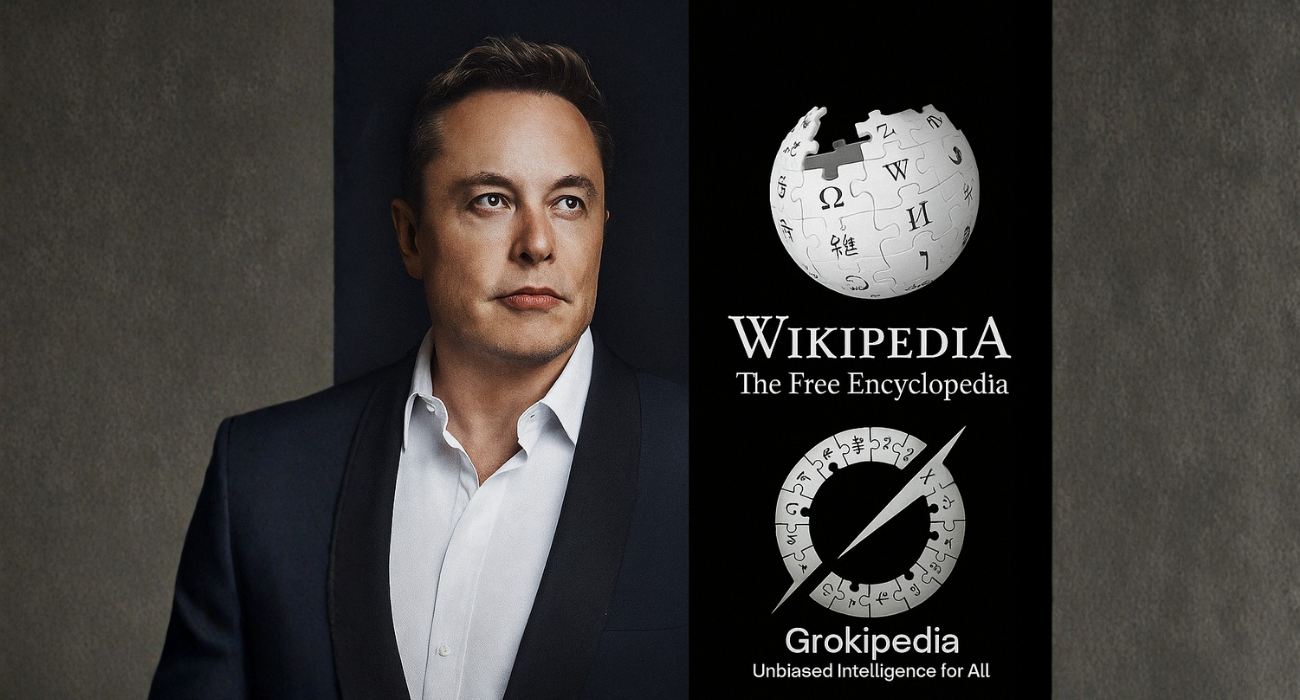
In a provocative move within the knowledge-sharing sphere, Elon Musk’s AI company xAI officially launched Grokipedia on October 27 2025, marking the arrival of an AI-generated encyclopedia designed to challenge the dominance of Wikimedia Foundation’s Wikipedia. AP News+2Geekflare+2
Touted as “version 0.1,” Grokipedia debuted with approximately 885,000 entries, a fraction of Wikipedia’s more than 7 million English-language articles—but sufficient to demonstrate Musk’s ambition. The platform uses xAI’s Grok AI model to generate and fact-check content, rather than relying on the volunteer-editor model that underpins Wikipedia.
Core claims and positioning
Musk framed Grokipedia as a corrective to what he perceives as Wikipedia’s editorial bias and ideological slant. “We are building Grokipedia … Will be a massive improvement over Wikipedia,” he tweeted. According to Musk, the site aims to provide “the truth, the whole truth, and nothing but the truth.”
Key differences (and controversies)
-
Creation model: Unlike Wikipedia’s collaborative human editing, Grokipedia articles are entirely AI-generated and labeled as “fact-checked by Grok.”
-
Adaptation from Wikipedia: Early findings show that many Grokipedia entries carry disclaimers stating they are “adapted from Wikipedia” under the Creative Commons BY-SA license. Critics say this raises originality and attribution issues.
-
Bias concerns: Analysts note that some entries appear to reflect right-leaning narratives and question the platform’s claims of neutrality. For example, an article on gender reportedly begins with a binary classification, in contrast to Wikipedia’s broader framing.
-
Technical hiccups: Grokipedia reportedly experienced server disruption soon after launch, highlighting the challenge of scaling a new platform in real time.
What this means for the knowledge ecosystem
Grokipedia represents a significant shift in how encyclopedic knowledge may be generated and curated in the AI era. By bypassing human abstraction and aiming for algorithmic “fact-checking,” the platform raises questions about transparency, accountability, and editorial integrity. The Wikimedia Foundation reaffirmed its commitment to human-centred editing and open collaboration.
For users, the arrival of Grokipedia offers an alternative way to access information—but one that requires scrutiny given the early evidence of repackaged content and political leaning. As Musk’s team pushes toward a future version 1.0 that is “10× better,” the broader tech and media world will watch closely to see whether the platform can deliver on its promise without replicating the very biases it seeks to overcome.

