



Saudi Arabia Introduces Major Changes to Iqama Rules: New Photo Requirements, Skill Categories, and Digital Compliance Framework
Saudi Arabia has rolled out major reforms to its Iqama (residence permit) system in 2025, bringing significant changes for foreign workers and employers across the Kingdom. These updates affect everything from photo changes on Iqama cards to digital compliance, workforce classification, and employer responsibilities. The Ministry of Passport and Immigration (Jazat) has emphasized that these measures are aimed at strengthening regulation, aligning workforce structures with the Saudi Standard Classification of Occupations (SSCO), and supporting Saudi Arabia’s wider Saudization goals.
New Rules for Changing Photos on Iqamas
The Saudi Ministry of Passport and Immigration recently issued updated guidelines regarding the process of changing photos on Iqama cards. According to the ministry, foreign workers can request a photo update only when there is a noticeable change in their facial features or physical appearance.
This process is not automatic workers must present a valid and reasonable justification for the change. Requests without credible explanations will be rejected.
In its statement to the Saudi news agency, the ministry clarified that applicants must:
• Book an appointment at their nearest Jazat office
• Bring a valid passport
• Provide a new, recent photograph
These steps apply when the photo on the Iqama no longer matches the individual’s current appearance, potentially causing identity verification issues.
Iqama Issuance Deadlines and Penalties
The ministry also issued a reminder for foreign workers arriving on work visas:
An Iqama must be issued within 90 days of arrival.
Failure to complete the process within this three-month window will result in a fine of 500 Saudi Riyals.
Additionally, all new foreign workers must undergo a mandatory medical test before receiving their Iqama.
Major Overhaul of Saudi Arabia’s Iqama System (2025)
Beyond photo regulations, Saudi Arabia has introduced sweeping structural changes to the Iqama framework. These reforms redefine how foreign workers are classified, how work permits are processed, and what steps employers must take to remain compliant.
These updates are designed to modernize workforce regulation and align the country’s job market with the Saudi Standard Classification of Occupations (SSCO) and national Saudization strategies.
Three Major Shifts in the 2025 Iqama System
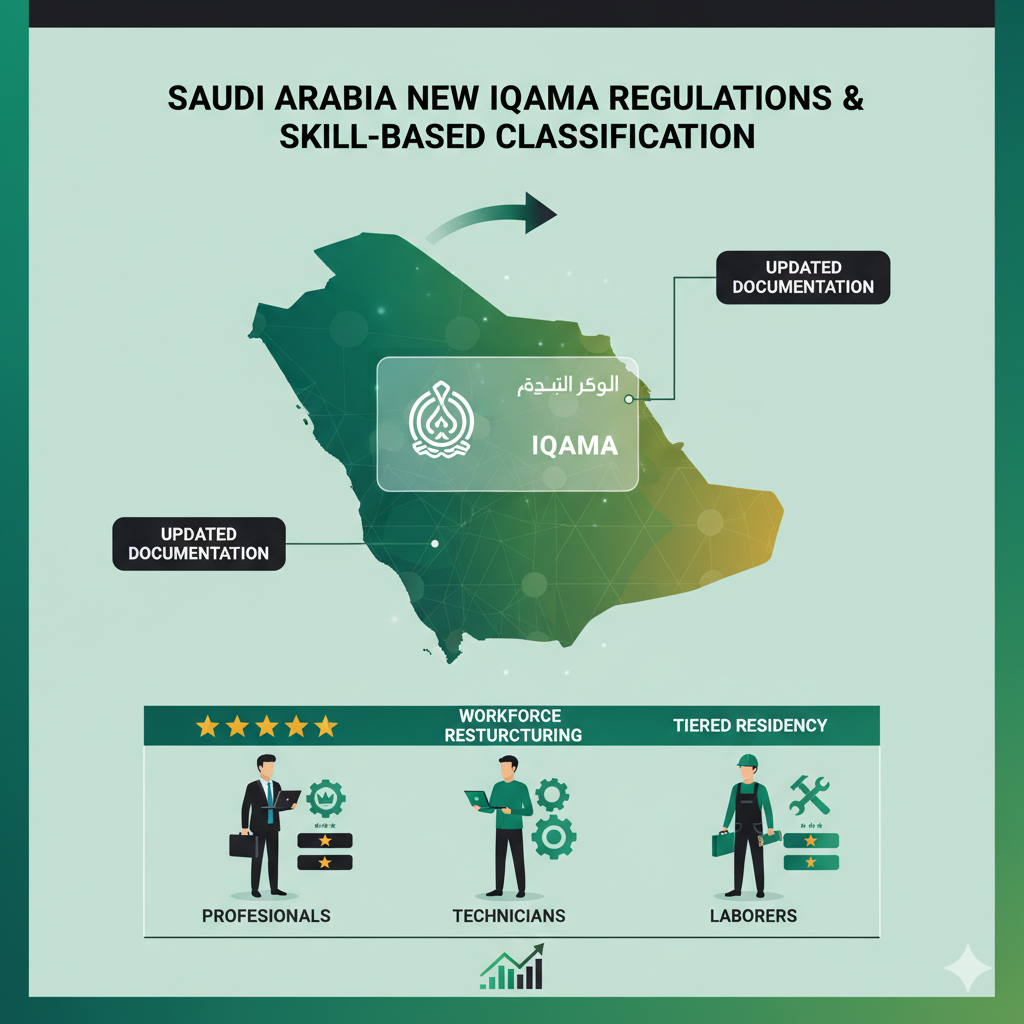
1. Skill-Based Categorisation of All Foreign Workers
Saudi Arabia now divides foreign employees into three skill levels:
• High-Skilled
Professionals such as engineers, IT specialists, doctors, and senior experts.
Eligibility is evaluated through a new points-based system.
• Skilled
Roles including technicians, supervisors, and administrative staff.
• Basic
Manual labor roles, which now come with a maximum age limit of 60 for foreign workers.
This categorization ensures that every job title matches SSCO standards and prevents misclassification.
2. Points-Based System for High-Skilled Iqamas
High-skilled workers are no longer approved based solely on degrees or salary. Instead, the new scoring model evaluates:
• Education
• Experience
• Professional qualifications
• Compensation level
The goal is to ensure that workers in advanced roles have the required expertise and that employers maintain transparent hiring standards.
3. Digital Compliance Through Qiwa and Mudad
The updated system integrates directly with Saudi Arabia’s official digital platforms:
• Qiwa Workforce management and job classification
• Mudad Payroll and contract compliance
Employers must ensure that all job titles, role descriptions, and salaries match SSCO requirements. Any inconsistencies or missing information can:
• Delay Iqama approvals
• Result in application rejections
• Trigger compliance penalties
These requirements applied to existing employees from July 2025 and became mandatory for all new hires from 3 August 2025 onward.
Impact on Employers:
Higher Responsibility, Greater Precision
While the new system offers businesses more flexibility to hire high-skilled talent, it also places greater responsibility on employers. Companies must now:
• Reclassify all existing foreign workers in Qiwa
• Ensure job titles and salaries match SSCO standards
• Update internal HR and recruitment processes
• Plan hiring strategies in accordance with Saudization rules
• Maintain accurate digital records to avoid penalties
Incorrect classifications or incomplete data can disrupt operations and delay project timelines, especially for companies relying heavily on foreign expertise.
Connection to Saudization
The 2025 Iqama reforms strongly support Saudi Arabia’s Saudization agenda. Basic-level roles may face tighter restrictions, encouraging employers to hire more Saudi nationals in entry-level positions.
Businesses are advised to monitor changes in Saudization quotas closely and adjust recruitment plans accordingly.
Frequently Asked Questions
When do the new Iqama rules take effect?
Reclassification of existing employees on Qiwa began in July 2025, and all new hires fall under the new rules starting 3 August 2025.
What happens if my workforce is not classified correctly?
Incorrect or incomplete records can delay applications, cause rejections, and lead to compliance issues.
How does the points-based system work for high-skilled employees?
Approvals are based on a combination of qualifications, experience, and salary. Employers must submit accurate and verifiable documents.
Is there an age limit under the new system?
Yes. Foreign employees in basic-tier roles cannot exceed the age of 60.
Conclusion
Saudi Arabia’s updated Iqama system represents one of the most significant shifts in the Kingdom’s labor regulation in recent years. From stricter photo update procedures and mandatory medical testing to new skill classifications and digital compliance requirements, the system is designed to build a more efficient and transparent workforce structure.
For foreign workers, these reforms bring greater clarity. For employers, they introduce new responsibilities but also new opportunities to recruit highly skilled talent.
By adapting early and keeping records compliant, businesses can navigate these changes smoothly and continue contributing to Saudi Arabia’s rapidly evolving economy.

