



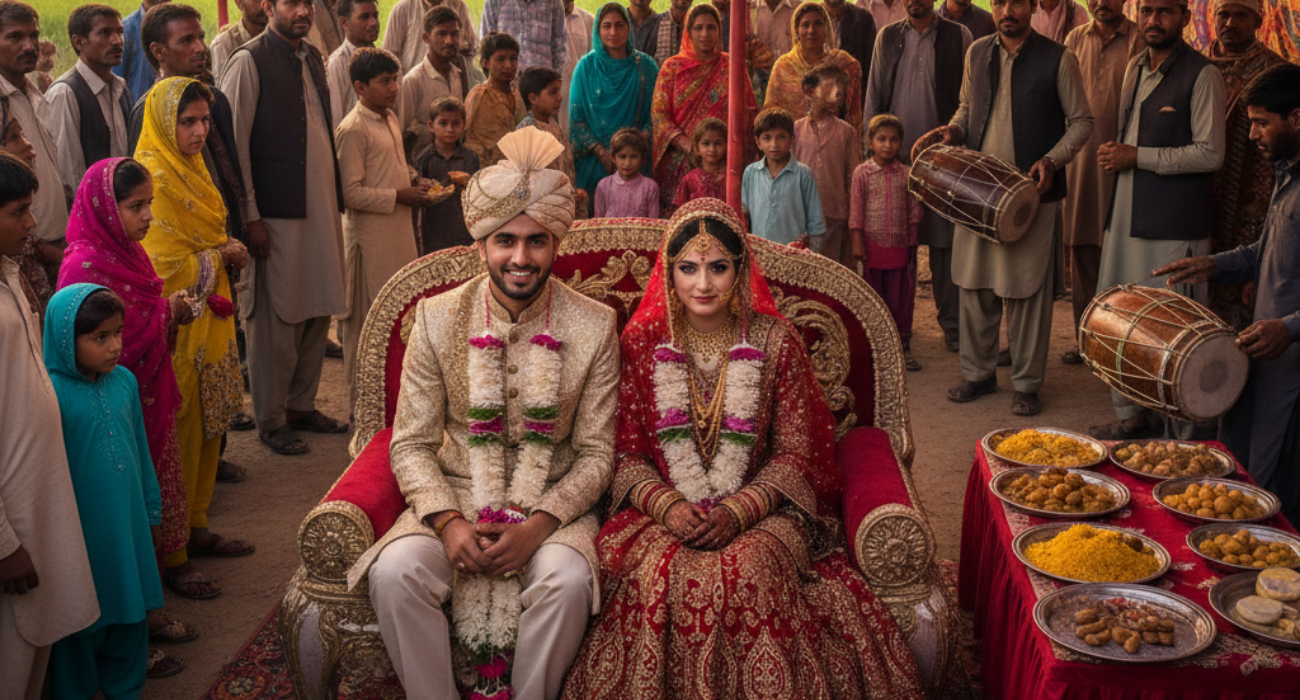
In a landmark decision that promises to ease the financial burden on thousands of working-class families, the Punjab government has significantly increased the marriage and death grants offered to industrial and mining workers. The move has been welcomed across the province as a much-needed measure to support families who often struggle to afford major life expenses, especially weddings and unforeseen tragedies.
For years, parents from low-income backgrounds worried about managing the ever-rising cost of their children’s marriages. Those earning daily wages or living paycheck to paycheck frequently found themselves sinking into debt just to celebrate the most important event in their children’s lives. That burden, however, has now been considerably reduced.
The Labour Department has officially confirmed a substantial Rs200,000 increase in the marriage grant, taking it from Rs400,000 to Rs600,000. The decision has brought immense relief to thousands of households, turning long-standing anxieties into renewed hope.
Likewise, the death grant provided to families of deceased workers a support system that plays a crucial role in helping grieving families stay afloat has been raised from Rs800,000 to Rs1,000,000. Officials say this enhancement aims to create a stronger financial cushion at a time when families are most vulnerable.
A government spokesperson described the revised grant structure as a reflection of the administration’s “renewed commitment to the welfare of the working class,” stressing that the goal is to ensure workers are backed by meaningful financial support during significant life events.
Expanded Marriage Grant Programme: What Workers Need to Know
The Punjab Workers Welfare Fund (PWWF) oversees the marriage grant, which is intended to extend financial relief to eligible industrial and mining workers. With the newly revised amount, the support program has become one of the province’s most impactful welfare initiatives.
Here is a detailed overview of the program based on the updated criteria and processes:
Eligibility Criteria for Industrial and Mining Workers
- Minimum Service Requirement
An applicant must have at least three years of cumulative service at the time the marriage takes place.- Daughters of workers who died during service or retired due to disability are also eligible, provided the deceased or retired worker had an EOBI or PESSI card, and had previously received a PWWF death grant.
- Retired or Laid-Off Workers
Retired or laid-off workers applying for the grant must submit a fresh life certificate attested by a government gazetted officer. - Employment in a Registered Company
The worker must be employed in an active company registered under the Factories Act 1934, Punjab Industrial Relations Act 2010, or Punjab Mining Concession Rules 2002. - EOBI or PESSI Contribution Requirement
Applicants must meet the definition of a “worker” under PIRA 2010 and must be registered with EOBI or PESSI, with at least 9 months of contributions within the last 12 months. - Grant Frequency
The marriage grant is allowed once per marriage case, meaning a grant can be taken for the marriage of each daughter or for the marriage of a lady worker herself. - Application Timeline
Applications must be submitted within one year of the bride’s marriage.- In justified cases, applicants may seek an extension up to two years, upon approval from the Chairperson, PWWF.
- Age Requirement for Bride
The bride must be at least 18 years old at the time of the nikah.
Important Note:
A worker can claim the marriage grant for all daughters who meet eligibility criteria. If both parents are workers, only one may apply for the grant.
Revised Rate of Marriage Grant
- The updated grant is now Rs600,000 per case, a major jump from the previous Rs400,000, offering unprecedented relief to lower-income families.
(The earlier rate of Rs400,000 had been in place since 27 March 2023.)
Digital Application Process: Easier, Faster, and More Transparent
To ensure convenience and transparency, the entire marriage grant application system has been shifted online. This digital approach helps eliminate middlemen, reduces processing delays, and provides applicants with real-time updates.
How to Apply Online
- Read Instructions and Prepare Required Documents.
- Register / Sign-Up via: Portal
- Login using the password emailed to you during registration.
- Enter complete information accurately in all required sections.
- Upload scanned and attested documents, including:
- Nikah Nama
- Employment Certificate
- Affidavit on Stamp Paper
- Original cheque leaf or bank details certificate
- Review details and submit the application.
- Keep checking your portal for updates.
Notifications are also sent via SMS and Email. - For support, applicants may contact their respective Labour Welfare Office or Regional Mines Labour Welfare Office.
A Major Step Toward Social Protection
The enhancements in marriage and death grants are part of a wider social protection vision. By offering stronger financial cushions, the Punjab government aims to prevent vulnerable families from falling into debt cycles. Marriage expenses, medical emergencies, and sudden deaths are often the leading causes of financial instability among low-income households.
With this new decision, workers now have access to higher support levels, enabling them to handle life’s biggest events with dignity.
Labour rights advocates say the revised grants will not only help families manage financial pressures but will also strengthen Pakistan’s broader social safety net.
Public Reaction: Relief, Gratitude, and Renewed Hope
Across Punjab, workers have welcomed the announcement with immense gratitude. For many families, the marriage grant is the difference between a modest, debt-free ceremony and one financed through loans that take years to repay.
Similarly, the hike in death grants ensures that families dealing with tragedy are not left carrying the additional burden of financial distress.
As the new policy comes into effect, thousands of workers are expected to benefit in the coming months marking a significant stride toward a more inclusive welfare system in Punjab.
By; Abiha Bilal

