



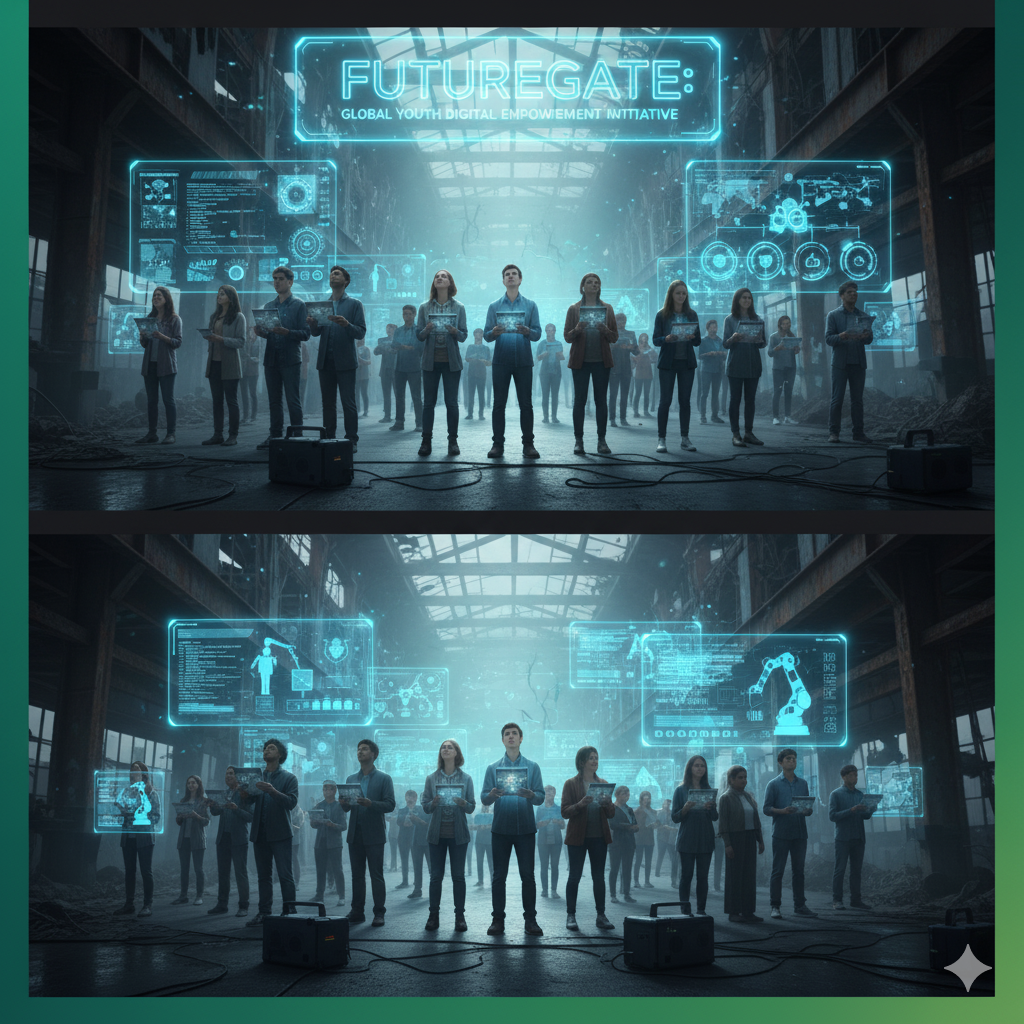
 How Technology Is Reshaping the Fight Against Rising Youth Unemployment
Youth unemployment has become one of the defining social and economic challenges of the past decade. Across countries both wealthy and developing, young people are entering a labor market that feels increasingly unforgiving, unpredictable, and fragmented. The numbers vary by region, but the story is similar everywhere: more educated young adults, fewer traditional job pathways, and a widening gap between what employers expect and what graduates can actually provide. Yet in the middle of this crisis, a surprising source of momentum has emerged technology. What once seemed like a force that contributed to job displacement is now being reimagined as a bridge toward opportunity, skill-building, and economic recovery.
For many young people, traditional employment models simply no longer fit. Industries that once absorbed millions of entry-level workers retail, manufacturing, customer service — have been reshaped by automation and cost-cutting. At the same time, universities continue to graduate students into fields where demand has stagnated. The result is a mismatch often described by economists as “qualification inflation”: young people hold degrees, but not the ones employers urgently need. This disconnect is one of the driving reasons youth unemployment rates remain stubbornly high, even when overall national unemployment appears low.
But technology, particularly the combination of artificial intelligence, online learning, and digital labor platforms, is pushing back against this trend. Unlike earlier forms of automation that replaced entry-level jobs, today’s wave of digital tools is creating new roles at a pace that traditional education systems struggle to match. Instead of waiting years for curriculum updates, young people are turning to fast, modular, tech-centered learning pathways that allow them to adapt to emerging industries in real time.
The rise of digital upskilling platforms is one example. Over the last several years, online academies focused on data analytics, cybersecurity, artificial intelligence, user-experience design, and software development have exploded in popularity. Their promise is simple: learn the skills employers want now, and learn them quickly. This approach resonates with a generation accustomed to on-demand services and rapid technological change. Unlike four-year degrees, these programs are flexible, affordable, and updated regularly to match industry shifts. Many companies have even begun partnering with these platforms, treating them as pipelines for hard-to-fill technical roles.
Beyond upskilling, AI-powered career tools are reshaping how young people explore opportunities. New guidance systems use machine learning to analyze global job trends, match personal strengths with emerging fields, and suggest tailored pathways for growth. These tools mimic the personalized support once provided only by high-quality career counselors a resource many students never had access to. Now, career planning is becoming more data-driven and more accessible, reducing the guesswork that often leaves graduates wandering or underemployed.
At the same time, the digital economy has opened doors for young entrepreneurs in ways unimaginable a generation ago. Social media, once dismissed as a distraction, has become a launchpad for small businesses, creative careers, and independent work. A young person with nothing more than a smartphone can now run an online store, offer freelance services, build a personal brand, or create content for global audiences. While not everyone becomes the next viral success, the democratization of business tools has undeniably lowered the barrier of entry for self-employment.
Meanwhile, emerging AI tools have made modern entrepreneurship more attainable. Automated graphic design systems allow non-artists to produce professional branding. No-code platforms enable people with no programming background to build apps and websites. AI-driven market research tools help beginners validate business ideas in minutes rather than months. The result is a generation that feels empowered to experiment, prototype, and pivot often without needing heavy financial investment.
Of course, technology is not a perfect solution. Inequalities persist. Not everyone has reliable internet access, supportive learning environments, or the financial flexibility to invest in training. The rapid evolution of digital tools can also create new forms of exclusion: those who cannot keep up risk being left further behind. Additionally, the gig economy one of the largest tech-enabled employment sectors has sparked concerns over unstable income, limited benefits, and burnout. These challenges highlight a broader truth: while technology can ease the unemployment crisis, it cannot solve it alone.
Yet the shifts happening now suggest a growing recognition that the future of work is hybrid a blend of traditional employment, ongoing digital learning, and entrepreneurial experimentation. Governments are starting to invest in national digital-skills programs. Companies are reevaluating hiring practices, placing more weight on demonstrated skill and less on formal degrees. And young people, far from being passive victims of economic change, are increasingly proactive in shaping their own paths.
Youth unemployment remains a serious global issue, but the narrative is evolving. The same technological landscape that once threatened to replace human labor is now offering young people a new set of tools tools to learn, to innovate, and to work on their own terms. The challenge lies not in resisting technological change but in ensuring young people are equipped to move with it. If current trends continue, this generation may not only overcome the employment crisis they might redefine what “work” means altogether.

