



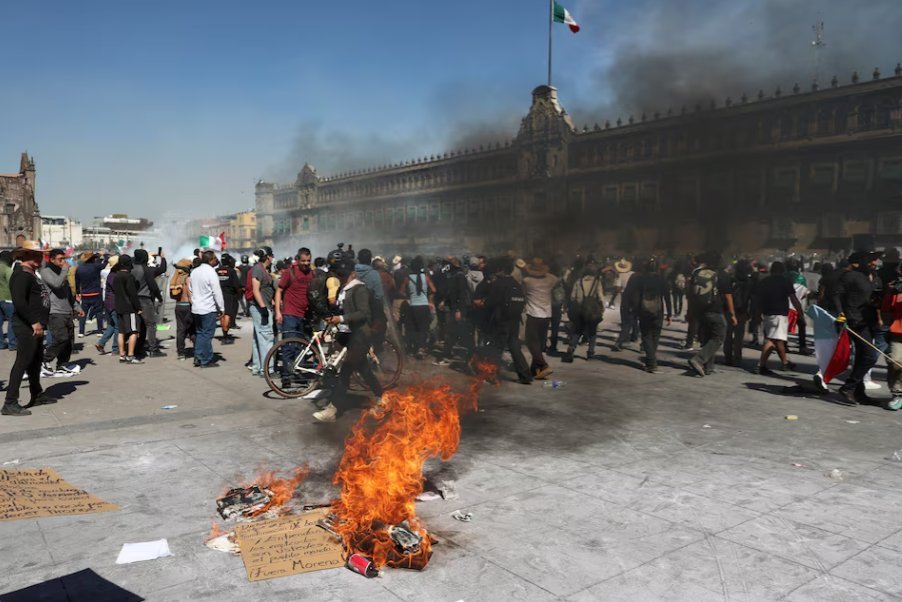
Mexico has been rocked by a powerful wave of youth-led protests, as outrage against insecurity, corruption, and political dysfunction spilled onto the streets of more than 50 cities. What began as scattered demonstrations rapidly evolved into a nationwide movement driven largely by Generation Z young people who are increasingly unwilling to accept the failures of the political system.
Violence Erupts Outside the National Palace
In Mexico City, thousands of young protesters marched toward the historic National Palace, chanting slogans demanding justice and safety. Many carried flags marked with a pirate-skull emblem a symbol that has become synonymous with the youth-driven revolt emerging across Latin America.
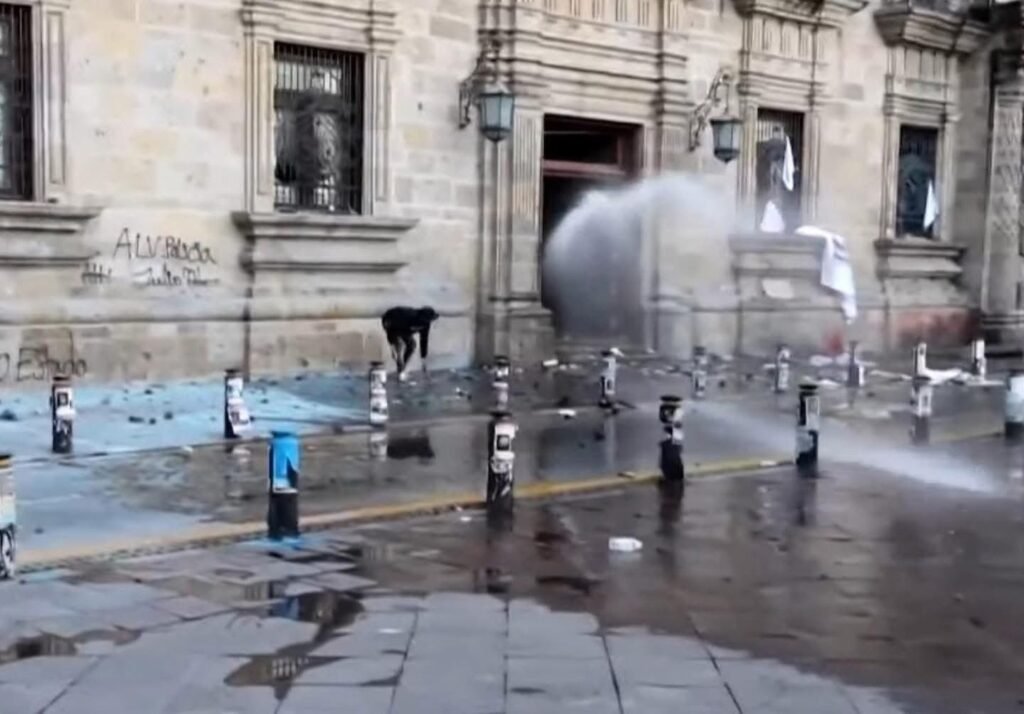
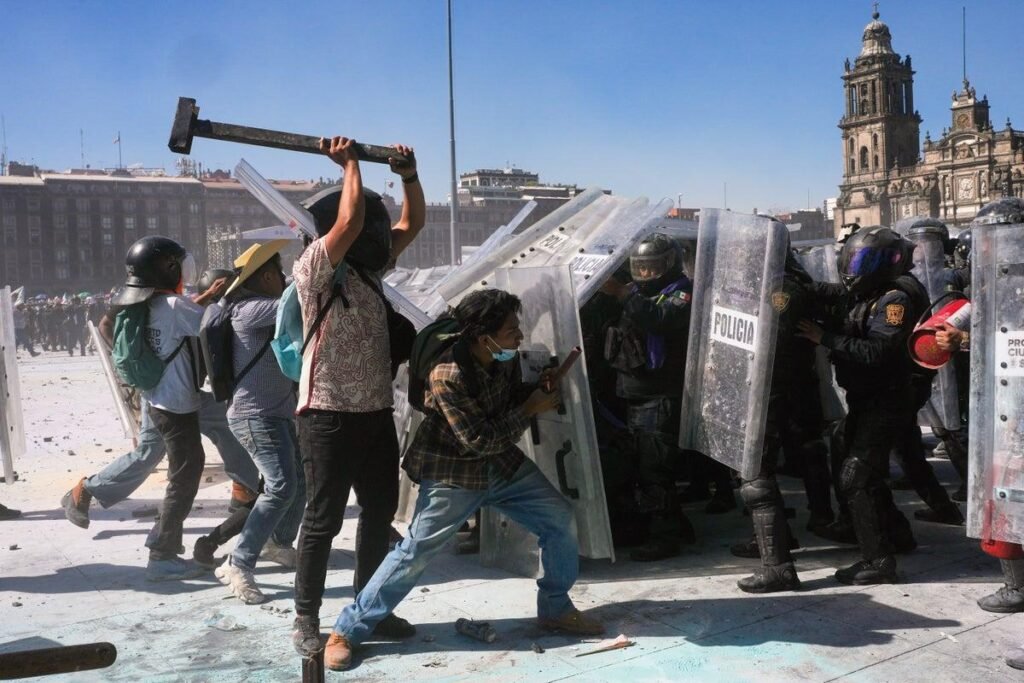
The atmosphere shifted dramatically when protesters pushed through metal barricades outside the palace. Police responded with tear gas and heavy force, leading to hours-long clashes that left at least 120 people injured, including a large number of police officers. Fire extinguishers were discharged in the chaos, tear gas filled the central plaza, and the scene briefly resembled a battlefield.
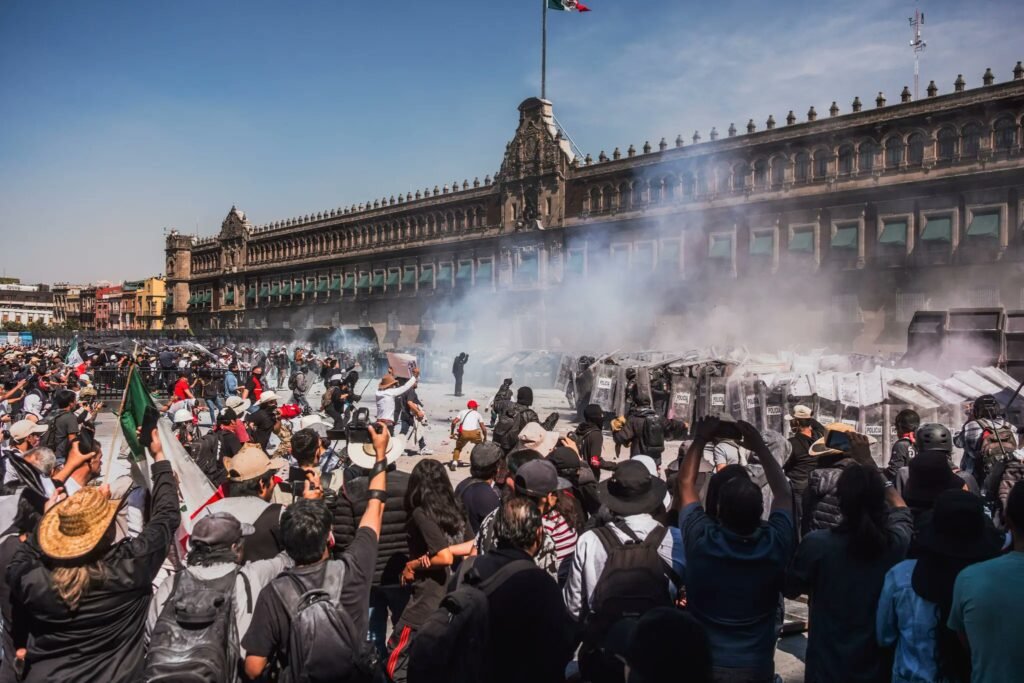
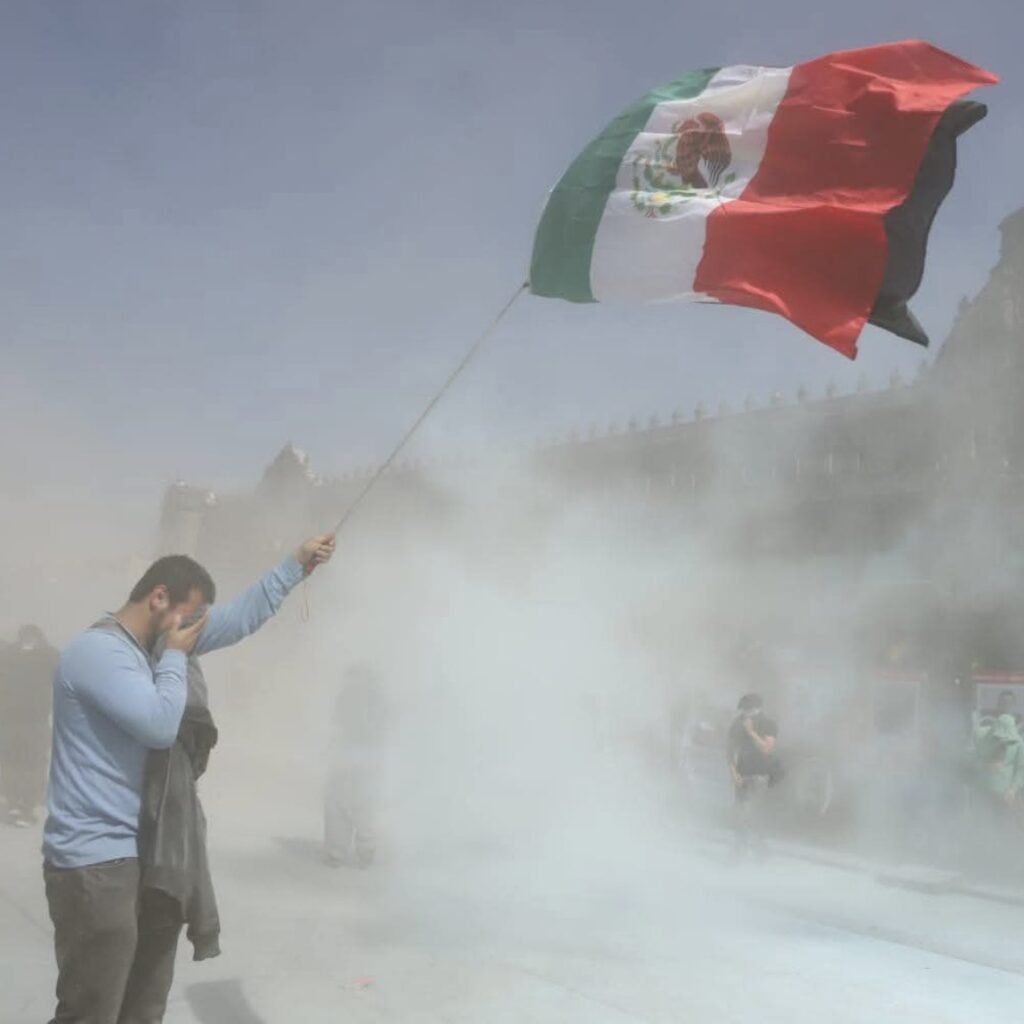
Mexico City’s security officials later confirmed that around 100 police officers required medical treatment due to stone-pelting, bruises, and cuts, while several protesters also sustained injuries.
A Mayor’s Assassination Sparks a National Reckoning
The immediate trigger for the protests was the assassination of Carlos Alberto Manzo Rodríguez, the mayor of Uruapan in Michoacán. Known for his outspoken stance against local drug trafficking groups, Manzo Rodríguez had become a rare symbol of political courage in a region plagued by cartel influence. His killing carried out during a public ceremony ignited widespread anger, especially among young Mexicans who see him as a leader who dared to confront organized crime directly.
For many demonstrators, the protest was not merely political; it was personal. It was a plea for justice, a demand for security, and a call to honor a leader who lost his life trying to reclaim his community from criminal networks.
Government Pushes Back, Blames External Influence
President Claudia Sheinbaum’s administration responded defensively, suggesting that opposition parties and foreign actors were attempting to manipulate the protests. Officials accused right-wing groups of infiltrating the Gen Z movement and using social media bots to artificially inflate turnout claims the protesters strongly deny.
Despite the government’s allegations, the anger pouring into the streets reflected something unmistakably organic: a generation exhausted by corruption, fed up with violence, and ready to challenge long-standing political structures.
Older Protesters Join the Movement
Although the movement is driven primarily by Gen Z activists, the demonstrations also drew older citizens, retired professionals, and political opposition members. Their participation underscored a growing public frustration with the government’s inability to curb violent crime or hold corrupt officials accountable.
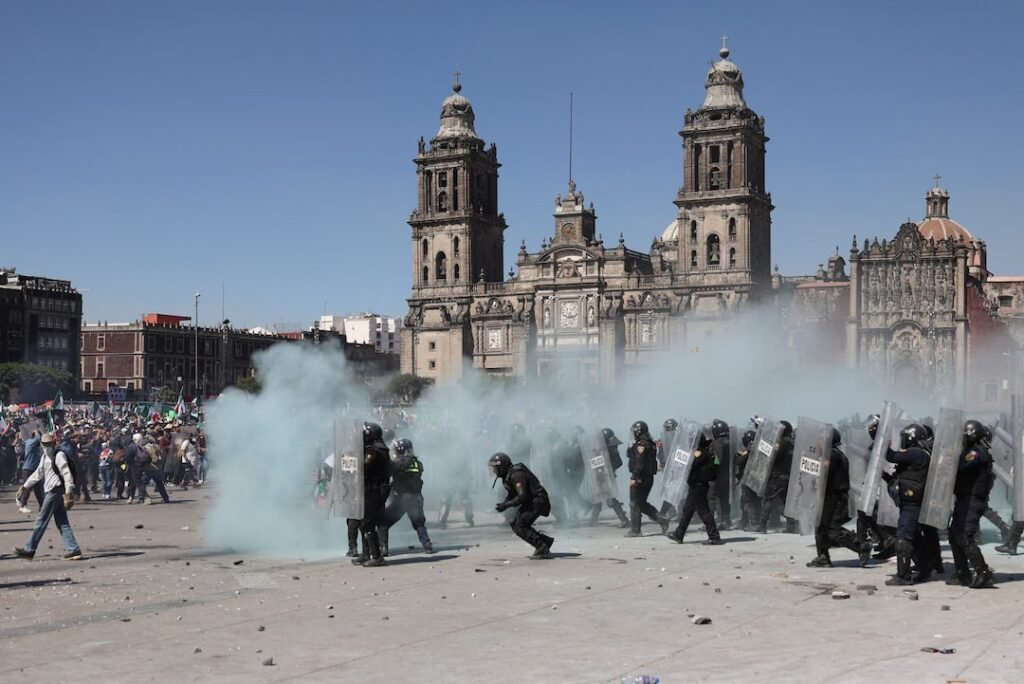
What united the diverse crowd was a shared sense that Mexico is facing a crisis of governance. Protesters demanded stronger security reforms, transparent investigations into political assassinations, and a national strategy that prioritizes civilian safety over political theatrics.
A Parallel Youth Uprising in Nepal Shows Similar Patterns
Mexico’s youth revolt shares striking similarities with the Gen Z uprising in Nepal, where digital activism evolved into one of the most consequential political movements in the nation’s modern history. In Nepal, young activists mobilized against corruption, elite privilege, and human rights abuses ultimately forcing the collapse of the government and prompting fresh elections.
The Nepali movement issued a sweeping nine-point reform agenda, demanding justice for protest victims, constitutional reforms, digital rights protections, and full representation of marginalized groups. Their success has inspired youth across the globe, including in Mexico, where similar frustrations with elite capture, corruption, and insecurity have fueled calls for structural change.
A Nation at a Crossroads
Mexico’s political establishment now finds itself under immense pressure. The killing of Mayor Manzo Rodríguez has amplified longstanding concerns about the collusion between criminal groups and local authorities. The violent clashes in Mexico City only intensified public anger, sparking debates about police brutality, civic freedoms, and the government’s ability to ensure basic safety.
What happens next remains uncertain. The youth-led protests could either fizzle out amid government pressure or evolve into a broader movement demanding systemic change much like the historic uprisings seen recently in Sri Lanka, Bangladesh, and Nepal.
Yet one thing is clear: Mexico’s younger generation has reached a breaking point. They are digitally connected, politically aware, and unwilling to remain silent in the face of corruption and violence. Their voices, once overlooked, are now echoing across the country, reshaping national discourse and challenging the status quo.
As Mexico stands at a political crossroads, the message from the streets is unmistakable:
a new generation is demanding a future defined by justice, transparency, and real security not empty promises.
Write By: Abiha Bilal

